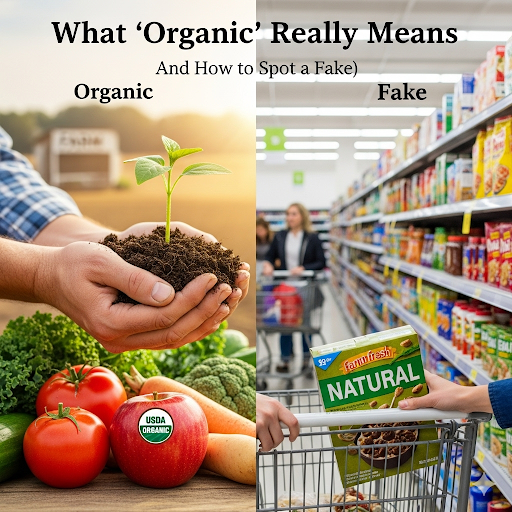
The word "organic" is everywhere—from produce aisles to clothing labels. It's often associated with health and sustainability, but what does it really mean? For many consumers, the term can be confusing, shrouded in marketing jargon and conflicting information. This guide will demystify the "organic" label, explain key certifications, debunk common myths, and equip you with the knowledge to identify truly organic products and avoid "greenwashing."
Understanding the Certifications:
The most important thing to look for is an official certification seal. These seals aren't just for show; they signify that a product has met a rigorous set of standards set by a governing body.
USDA Organic (United States)
In the U.S., the **USDA Organic seal** is the gold standard. To earn this certification, a farm or business must follow strict rules:
- **No Synthetic Pesticides or Fertilizers:** The use of most synthetic inputs is prohibited. Farmers instead rely on natural methods like crop rotation and composting.
- **No GMOs:** Genetically modified organisms are strictly forbidden.
- **Soil Health:** Farmers must maintain or improve the quality of the soil through practices that enhance its living ecosystem.
Other Certifications
Look for equivalent seals in other countries, such as the **EU Organic logo** or **Canada Organic**. These logos have their own standards but generally follow the same core principles.
Debunking Common Myths
Myth: "Organic means no pesticides ever."
**Fact:** This is a common misconception. Organic farming allows the use of **naturally derived pesticides**, which are generally less toxic and persist for a shorter time in the environment compared to synthetic ones. The goal is to use them only as a last resort, relying on natural methods first.
Myth: "Organic food is more nutritious."
**Fact:** Research on this topic is ongoing and mixed. While some studies suggest organic produce may have higher levels of certain vitamins or antioxidants, the primary benefits are environmental and social—reducing exposure to synthetic chemicals and supporting sustainable practices.
How to Spot a Fake and Avoid Greenwashing
"Greenwashing" is when a company makes an unproven or misleading claim about a product's environmental benefits. Don't be fooled by labels that say "natural," "eco-friendly," or "farm-fresh" without a clear certification seal.
- **Look for the Seal:** The most reliable way to know if a product is certified organic is to find the official logo. If it's not there, the claims are likely unsubstantiated.
- **Check the Price:** Truly organic farming is more labor-intensive and often produces a lower yield. If an "organic" product is priced similarly to its conventional counterpart, be skeptical.
- **Ask Questions:** Don't hesitate to ask your retailer or farmer about their practices. A transparent business will be happy to share information about their sourcing and methods.
By understanding what "organic" truly means, you become an empowered consumer. You're not just buying a product; you're supporting a system that values the health of our planet and the integrity of our food.
Ready to explore truly organic options? Visit www.onlinemarketplaces.net for a curated selection of ethical and sustainable products.